
Collapsed Lung: Warning Signs and When to Seek Emergency Care
A collapsed lung can announce itself dramatically or arrive so quietly that a person puts it down to a pulled muscle. The condition, known medically as a pneumothorax, ranges from a small leak that heals alone to an emergency that needs a drain within minutes. Knowing the signs helps people act at the right speed.
What happens in a pneumothorax
The lungs sit inside the chest wall, separated from it by a thin space called the pleural space. When air leaks into that space, it pushes on the lung and the lung deflates, wholly or in part. The air may come from a tear in the lung surface, from an injury to the chest wall or from a medical procedure.
The practice of Mr Marco Scarci, a consultant thoracic surgeon, explains on its page about pneumothorax treatment that treatment depends on the severity and on whether the pneumothorax is primary, occurring without underlying lung disease, or secondary, occurring as a result of lung disease. It also notes that a chest X-ray is strongly advisable when a pneumothorax is suspected.
Size matters, but symptoms matter more. A large pneumothorax can be well tolerated in a fit young person, and a small one can be dangerous in someone with lung disease. Context matters.
The warning signs
NHS hospital information describes the typical symptoms. A leaflet from the Royal Berkshire NHS Foundation Trust says that a pneumothorax causes sudden sharp chest pain that is made worse by taking a deep breath in, and breathlessness. As a rule, it says, the larger the pneumothorax, the more breathless you become, and other symptoms may occur if an injury or lung disease is the cause, such as a cough.
Mr Scarci's practice describes the pain as sudden and one-sided, often compared to being stabbed, and worse on deep breathing or coughing. It adds a racing heart and a feeling of chest tightness, and says that partial collapses can cause only mild discomfort, shortness of breath on ordinary exertion or a feeling of not being able to take a proper deep breath.
Because the pain can resemble a heart problem, a muscle strain or a chest infection, the safest course with sudden chest pain and breathlessness is to be assessed promptly.
Children and teenagers can be affected too, and they may describe only a vague ache or a tight feeling. A parent who sees a young person holding one side of the chest, breathing fast or looking pale should seek medical help the same day. People with known lung disease, such as asthma or COPD, should not assume a sudden change is just their usual symptoms.
When to call 999
Some signs mean an emergency. The practice lists struggling to breathe and getting worse, a heart that is hammering, feeling dizzy or faint, blue lips or fingernails and unbearable chest pain. These can indicate a tension pneumothorax, in which air builds up and presses on the heart and the other lung.
Call 999 and do not drive. Sit upright if breathing is easier that way, stay calm, and tell the call handler about any known lung condition or recent chest injury. A person who has recently had a pneumothorax and develops sudden chest pain or breathlessness should call 999 and say so.
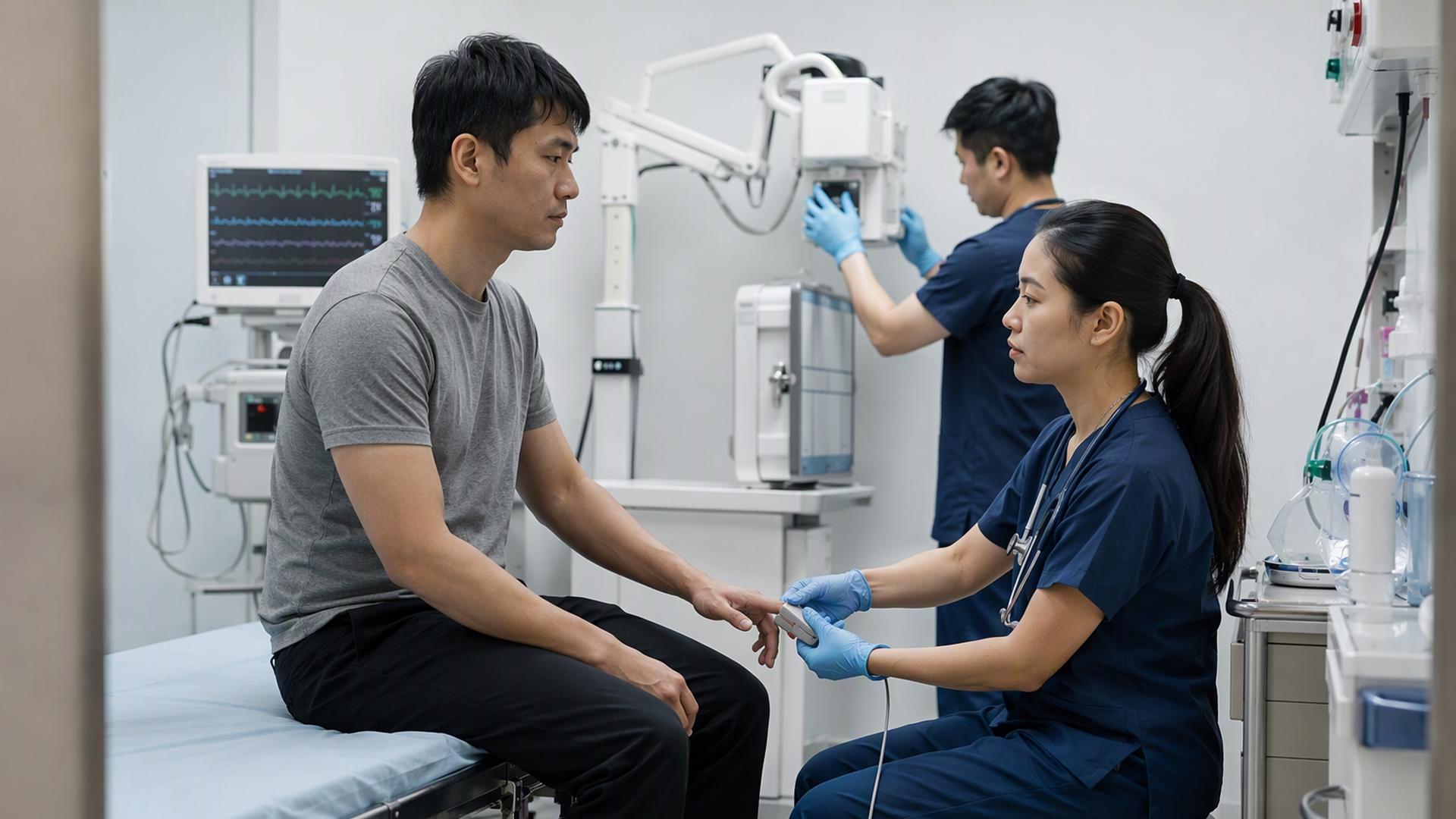
If symptoms are milder, such as a dull ache and mild breathlessness, contact a GP, NHS 111 or an urgent treatment centre the same day. A chest X-ray is the usual first test. Do not wait to see whether it passes if the pain is sharp and the breathlessness is increasing.
How it is treated
Treatment depends on size and symptoms. The practice lists observation for a small pneumothorax that causes no symptoms, oxygen therapy and chest tube insertion for larger or symptomatic ones. The Royal Berkshire leaflet adds that treatment depends on the size of the pneumothorax and the symptoms, and it mentions pleurodesis, in which a chemical is injected into the space between the lung and chest wall to stick them together.
Needle aspiration removes air with a syringe, and a chest drain, a thin tube placed between the ribs, lets the air escape until the lung re-expands. Keyhole surgery can repair the leak and fix the lung to the chest wall, and it is usually considered if the pneumothorax returns, fails to heal or occurs in a person whose job or hobby makes a recurrence risky.
Patients should ask what the plan is if the first approach fails, and how long they are expected to stay in hospital.
After the emergency
Recovery involves several steps. The leaflet explains that you can return to work and gentle activities once you feel well enough, and that you should attend the nearest emergency department, or call 999 if too unwell, if chest pain or breathlessness returns, explaining that you have had a pneumothorax recently.
Stopping smoking reduces the risk of a recurrence, and hospital teams will offer help. Ask your doctor before flying, diving or any activity involving pressure changes, since advice differs by case.
Follow-up usually includes a repeat chest X-ray and, for repeated episodes, a conversation with a thoracic surgeon about preventing future ones.
Pay attention to your body in the weeks afterward. A dull ache at the drain site, tiredness and mild breathlessness on stairs are common and usually improve, but a return of sharp pain or a sudden change in breathing is not. Keep your discharge letter and the details of the hospital that treated you, since they save time if you need care elsewhere, and tell your GP so that the episode is recorded.